
Master Oak sets the tone in luxury Toronto apartment
Project details
Location: Toronto
Country: Canada
Sector: Residential
Architect: Rebecca Paul Designs
Photographer: Salisbury Media Group


Natural down to the last detail
The authentic look and feel of oak played a key role in the material selection. “Many standard laminates look and feel too plastic, and that compromises the integrity of the design,” explains architect Rebecca Paul. For high-end interiors, traditional veneer has long been the natural choice. But it also comes with a premium price, natural variation and more demanding processing and finishing.
Master Oak introduces a new choice: performance veneer. It combines the authentic look and texture designers expect from veneer with the consistency, durability and ease of a high-performance surface. For Rebecca, that realism made all the difference. “You really can’t tell the difference. And that’s exactly the point.”
How Master Oak ties the entire interior together
In a luxury interior, you want everything to feel just right. That’s why Master Oak double fumed appears throughout the apartment. From the kitchen and built-in cabinetry to the bathroom, the oak design creates a warm, consistent look from room to room. And that sense of cohesion makes all the difference. “These homes are marketed as complete luxury concepts,” Rebecca explains. “So the look needs to be consistent throughout.”


The sustainable alternative to oak
And what if that warm oak look also came with a more sustainable material choice? Master Oak decorative panels are available on a particleboard substrate made from 100% high-quality recycled wood. Master Oak also offers practical advantages: it is three times more scratch-resistant than real oak, easy to maintain, and colorfast. The result? An interior that continues to impress long after that first look.
Panels used in this project:
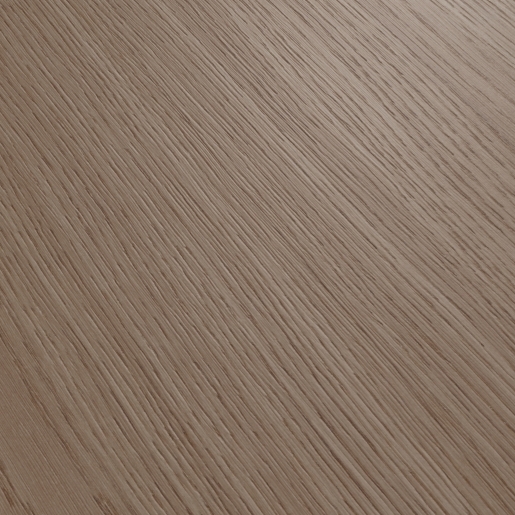
Master Oak double fumed
- 0H914 Master Oak (V2A)


